
Most people are asking the wrong question.
They’re asking, “What’s coming next?”
That’s not the real issue.
The real issue is this: are you built to handle what’s already here?
Because the next decade won’t reward those who cling to comfort, certainty, or outdated thinking. It will be selective. And the selection criteria won’t be obvious to those still playing by old rules.
The World Isn’t Breaking. People Are.
Yes, technology is accelerating.
Yes, AI is reshaping work.
Yes, institutions are being questioned and markets are moving faster than planning cycles.
But none of that is the real threat.
The real threat is emotional fragility paired with strategic blindness.
We trained people to avoid discomfort in a world that now demands resilience.
We rewarded short-term wins in an era that requires foresight.
We confused being informed with being prepared.
Knowing change is coming does not mean you’re ready for it.
Why Generations Matter More Than Ever
Here’s what history makes clear:
People don’t change first. Conditions do.
Every generation is shaped by the environment it grows up in:
- Scarcity or abundance
- Stability or chaos
- Trust or betrayal of institutions
- Opportunity or limitation
That conditioning shows up later in:
- Risk tolerance
- Work ethic
- Authority dynamics
- Decision-making under pressure
So when leaders complain about “this generation,” they’re really looking at the downstream effects of past environments.
History explains behavior.
Ignoring it guarantees misdiagnosis.
Cycles Are Predictable. Panic Is Optional.
Every era believes it’s different.
Every era is wrong.
Economic booms and busts.
Labor realignments.
Social unrest.
Technological disruption.
Cultural overcorrection.
These aren’t anomalies. They’re patterns.
Human behavior under pressure is remarkably consistent.
The leaders who fail aren’t the ones without data.
They’re the ones without context.
History doesn’t make you backward-looking.
It makes you early.
Pattern Recognition Is the Floor. Creation Is the Advantage.
Most people stop at awareness.
They can name the trends.
Quote the data.
Explain what’s happening.
And then they wait.
But leaders don’t wait for clarity. They design.
Pattern recognition is the entry point.
Pattern creation is where influence begins.
Every breakthrough was once an anomaly.
Every new model disrupted an old one.
Every “this is how it’s always been done” eventually collapses.
This is not a stability era.
This is a redefinition era.
And in redefinition eras, the rules are flexible for those bold enough to question them.
The Core Four Traits That Decide Who Thrives
Tony Robbins has studied high performers across decades, industries, and economic cycles. Four traits always show up—not as theory, but as behavior.
1. Emotional Mastery
Pressure is inevitable. Panic is optional.
High performers convert stress into momentum instead of letting it control them.
2. Empowering Beliefs
Beliefs shape decisions. Decisions shape destiny.
Successful people install beliefs that expand possibility instead of protecting comfort.
3. Pattern Recognition and Utilization
They see cycles early and act before the crowd.
This reduces risk and increases leverage.
4. Growth and Contribution
Achievement alone burns people out.
Growth and contribution sustain performance.
These traits aren’t personality-based.
They’re trained.
The Real Divide Ahead
The next decade won’t divide people by intelligence.
It will divide them by:
- Emotional regulation
- Strategic thinking
- Willingness to be uncomfortable
- Commitment to continuous learning
- Ability to integrate technology intelligently
AI will not replace people.
People who use AI will replace those who don’t.
And people who master themselves will outperform those waiting for stability to return.
The Bottom Line
The future isn’t something you predict.
It’s something you prepare for.
History gives you the map.
The present gives you the tools.
Leadership gives you the responsibility.
Comfort is no longer safe.
Awareness is no longer enough.
Reaction is no longer viable.
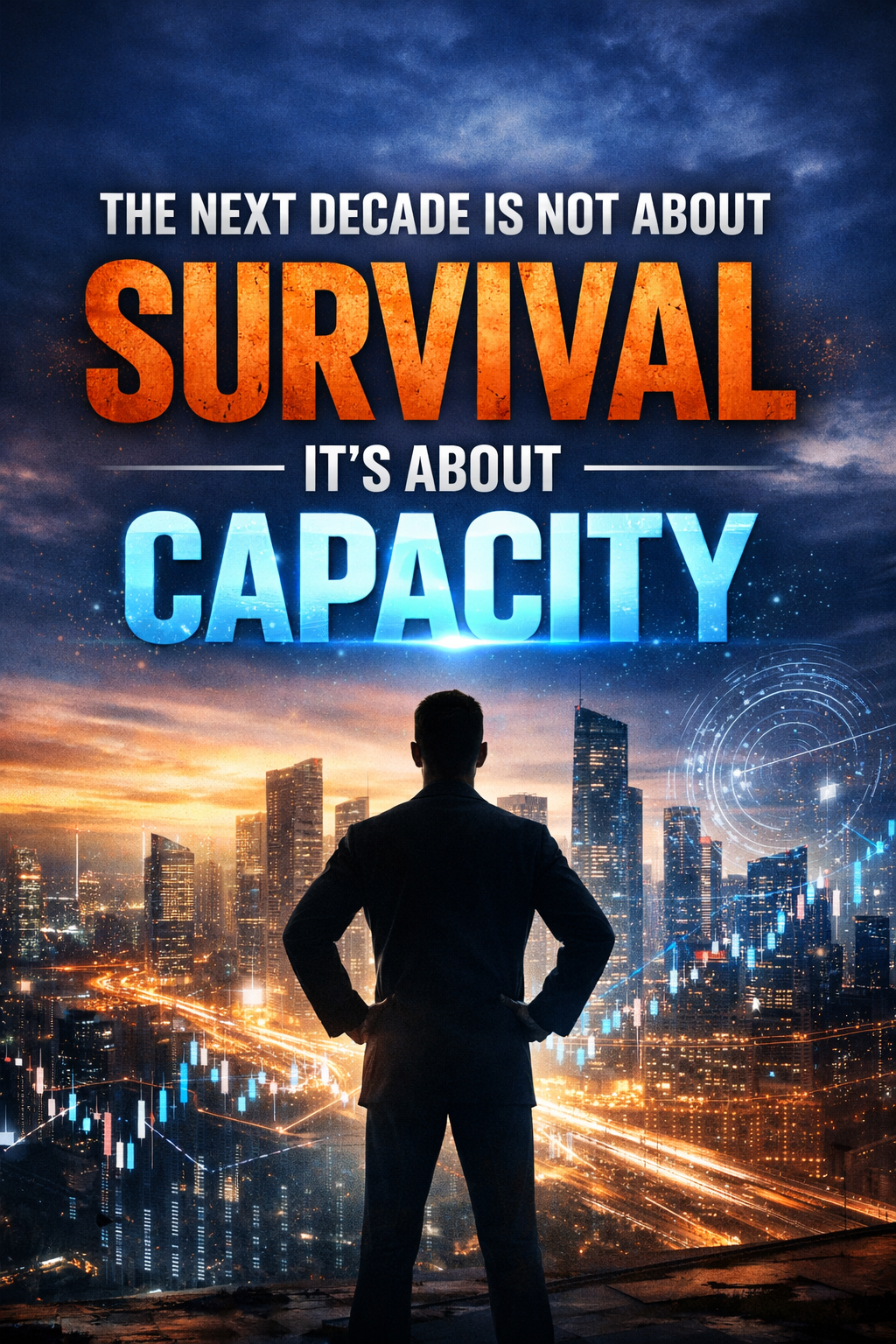
The next decade will reward those who build capacity—emotionally, strategically, and intellectually.
The question isn’t whether change is coming.
It’s whether you’re becoming the kind of leader who can handle it.
Because the future will not slow down.
And it will not wait.
 chamberu.blog
Leave a comment